
This is my first direct message to you since becoming DVSA Chief Executive and I wanted to take this opportunity to focus on a few issues I know matter greatly to many of you as driving instructors.
This blog post is also a longer read than what we’d normally publish, but please, stick with it, because I think it has some really important information for you.
Getting out and about and listening
Since I started at DVSA, I've spoken directly with driving instructors, learner drivers, examiners and other DVSA colleagues about how life-changing the driving test is. I've also read through what you told us in last year's ADI survey, including the harder messages.
Many of you told us that DVSA asks for feedback and then does not show what changes as a result. Many of you commented on DVSA's management and policy, saying we have not done enough to address the backlog. And fewer than 4 in 10 of you feel you get the chance to contribute your views before decisions are made that affect you. I take that seriously and I think it has, at times, been a fair criticism. I'll come back to what we're doing about it.
What has struck me most in my visits is the professionalism and commitment shown by instructors across Great Britain. I've met instructors managing their own waiting lists, having the difficult conversation of telling a pupil they are not ready and seeing their professional advice undermined by others telling them to “give it a go”.
I know this has not just been a professional frustration. It has hit your ability to plan, disrupted your diaries and added challenges to a job you find meaningful.
Your survey responses were clear on this: pupils putting lessons on hold for months, the stop-start cycle of filling gaps with new pupils only for former pupils to return at short notice and the near-impossible task of managing demand you cannot control. I do not underestimate the impact that this has had on you.
Long driving test waiting times are not simply an inconvenience for learners either. For some, they delay the next step in their education or career. They can affect:
- the learner in Middlesbrough hoping to begin an offshore wind apprenticeship on Teesside
- the learner in Knowsley wanting to start a career in logistics at one of the businesses based on Knowsley Industrial Park
- the learner in Mansfield hoping to begin an engineering apprenticeship with Toyota Manufacturing UK at Burnaston in Derbyshire
- the learner in Merthyr Tydfil completing NHS nursing placements
- the learner in Dundee travelling to Ninewells Hospital to qualify as an allied health professional
Behind every driving test is someone trying to take the next step in their life and behind every instructor is a small business trying to plan around a system that has, for too long, made planning very hard.
That is why reducing waiting times remains my top priority.
I'm not going to pretend this can be fixed overnight. Waiting times remain too long in many parts of Great Britain. But DVSA is working hard to improve the situation as quickly as possible and I want to be open about the progress we're making, the challenges that remain and the changes we're introducing as a direct result of what we've heard from you.
Focus on ADI qualification tests and standard
I've also heard clearly from the industry and people who want to become an instructor, or are already registered, that the long waiting times for a part 2 or 3 test or a standards check are unacceptable. This is having a negative impact on the driver training industry, those working to join it and the trainers or organisations sponsoring them.
While the focus of this blog post is around what we’re doing to tackle waiting times for learners, I want to reassure you that we are also looking at ways to improve our ADI services. Our Director of Enforcement, Marian Kitson, will provide an update soon on what we’re doing in this space.
Progress is being made, but this is not fixed
There are signs that the situation is beginning to improve and I want to show you the evidence rather than just assert it.
On 30 March 2026, 182 driving test centres were showing 24 weeks' wait in the booking service. By 27 July 2026, that had reduced to 143.
The measure we use for weeks until at least 10% of weekly appointments are available improved from 22.1 weeks at the end of March to 20.7 weeks at the end of July. However, the national median waiting time between booking and taking the test increased from 9.0 weeks to 11.1 weeks. This increase was expected as the unofficial ways of finding earlier tests were closed down.
The percentage of appointments still available to book has increased from 7.7% to 11.8% over the same period.
And the latest published data shows that in July 2026, DVSA completed 197,295 driving tests, the highest monthly total we have ever recorded. That was:
- 26,452 more than July 2025
- 35,628 more than July 2024
- 53,539 more than July 2023
These figures show movement in the right direction. But waiting times are still not good enough and I recognise that. Progress is not being felt evenly everywhere: some test centres and regions are seeing far less improvement than others. Many instructors and learners are still living with the impact of long waits every day and I will not pretend otherwise.
What's changed since March, and why
Since March, we've introduced a range of changes designed to make the booking service fairer and easier to manage.
We introduced these measures because too many learners were losing out to people misusing the booking service. Tests were being held, swapped, sold or resold in a way that made it harder for genuine learners to get an appointment. That was not fair to learners. It was not fair to you, supporting them. And it was not right for a public service to allow it to continue.
Here is what we've done:
- required learners to book their own driving test
- limited how often appointments can be changed
- limited how far appointments can be moved
- introduced identity checks and consent requirements when tests are swapped
- created a process to suspend online booking access where accounts are found to be misusing the service, alongside a review process for those decisions
- introduced a way for people to report suspected test resellers and misuse
- taken enforcement action against those found to be breaking the rules
These changes are starting to contribute to the improvements in availability I've described, but they are not the only cause. They sit alongside a wider package of work on examiner recruitment and overtime.
It will be 3 months since we brought the changes in in September. Our lead for driving test waiting times Christian Oreschnick will write a blog post giving you a more detailed look at what the data is telling us and plans to move examiners into areas where waiting times are highest.
I do need to be clear about one thing: these reforms are not going to be undone. They were introduced to increase fairness and stop exploitation and that principle stands.
But introducing changes at pace means listening, learning and improving as we go. Some things have worked well. Some things need improving. We will not shy away from telling you that as the evidence comes in.
Recruiting more examiners
Alongside the booking reforms, we've continued to recruit driving examiners and make use of overtime to increase testing capacity.
As of July 2026, we had 157 more full-time equivalent driving examiners in post than a year earlier, an increase of 10.9%. As a direct result, we have conducted over 120,000 more driving tests in the first 4 months of this financial year than over the same period last year.
I know that many of you have told us, repeatedly, that recruiting and retaining examiners should be DVSA's central focus.
I’m changing 3 things because of what you have told us
One of the clearest messages I have heard from you is that DVSA asks for feedback but does not always show clearly what changes as a result. I recognise that this has happened. I want to change it, starting with these 3 things.
1. Better guidance to help learners find a test
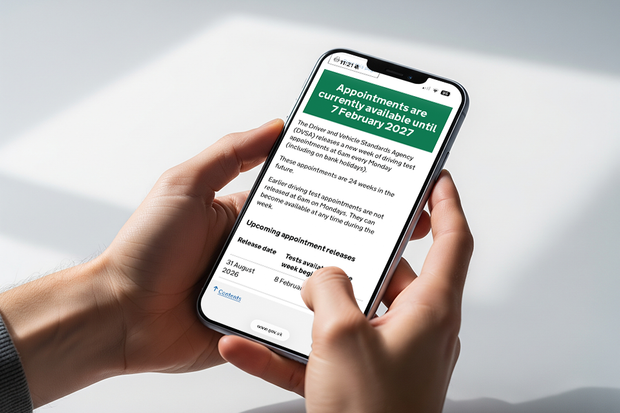
Today we are publishing new guidance to help you and your pupils better understand how driving test availability actually works. We've heard from many people who believe all appointments are released at 6am on Monday mornings. This leads to large queues to get into the service.
In reality, appointments become available at different times and for different reasons throughout the week. This guidance will not solve waiting times, but it should reduce confusion and help to get the Monday morning queue working more efficiently.
2. A way for learners who need additional support to appoint someone to deal with DVSA on their behalf
We've heard concerns from the industry about learners who need additional support and may struggle to manage a booking themselves.
We plan to work with The Association of Disability Driving Instructors, NASP, charities and learners who need additional support to build and test a new way for eligible learners to formally appoint someone to speak to DVSA on their behalf regarding their driving test booking.
We’ll update you further on the details on this work in future.
3. Letting you see Ready to Pass? emails sent to your pupils
Another thing many of you have told us is that it can be difficult to reinforce messages when you cannot see exactly what DVSA is sending to your pupils.
As driving instructors, you are the professionals who work with learners week in, week out. You understand their strengths, weaknesses and readiness better than anyone else. So it's important that you can see the information and advice we are providing alongside your lessons.
That's why today we've published copies of every Ready to Pass? campaign email in the driving instructor toolkit. These are refreshed versions and we will start to send them from 1 September 2026. You can now see what learners receive, when they receive it and how the messages align with different stages of the learning journey.
You will see that the emails consistently encourage learners to trust their instructor's judgement, develop all of the skills needed for safe driving and think carefully about whether they are genuinely ready before taking a test. They reinforce the message that passing the test is not the goal in itself; becoming a safe driver for life is.
Unfortunately, we cannot copy instructors into emails when they are sent, as they contain personal data.
However, where we can be more transparent, we should be. Publishing these emails means you can see exactly how we're supporting the conversations you're already having with your pupils, and how we're encouraging learners to value your professional expertise.
This builds on the wider changes we've recently made to the Ready to Pass? campaign, including the focus on the 27 driving skills and helping learners think about readiness in terms of safe, independent driving rather than simply passing a test.
Being more transparent
I believe we should be open about our performance, whether the news is good or bad. That's why we've started publishing more detailed information about driving test waiting times and availability, including data at individual test centre level.
You can see where progress is being made, where challenges remain and whether the actions we're taking are leading to results.
Greater transparency means greater accountability, and that is good for DVSA, instructors and learners alike.
What happens next
We will continue to recruit and train more driving examiners, make use of overtime, publish more detailed performance data, prevent misuse of the booking service and improve the service where evidence shows changes are needed.
Thank you for the important role you play in helping people become safe and competent drivers and for your patience while we work to make this system work better for you.

37 comments
Comment by John posted on
To recruit or attract more examiners
Pay and overtime needs to increase.
Driving test fees need to go up to accommodate this.
I’m sure members of the public will accept this as long as they see progress in reducing waiting times.
We have seen members of the public pay far more for driving tests at extortionate rates so I’m certain an increase in test fees will help in keeping as well as recruiting examiners.
£70 week day test
£75 weekend car test
Comment by Paul Harper posted on
As an instructor since 2004, I understand the new restrictions on test booking and the reasons behind them. However, you removed the access instructors had to view available test on the Online Booking System completely. Our pupils rely on our expertise and help in getting them ready for their test. This is very hard to do when we do not know when the tests are available. My suggestion for an improvement is simple. Allow us to view the tests on the OBS, but disable booking. This would make instructors look more professional as they would have up to date information to work with.
Comment by Lucy posted on
Thanks for your comment. We understand why many instructors would like greater visibility of driving test availability. ADIs play an important role in helping learners plan their training and prepare for test, and we recognise that changes to the booking system have altered how some instructors support their pupils.
The changes introduced this year were designed to ensure that learners remain in control of their test booking and to reduce opportunities for driving tests to be booked, traded or resold by third parties. Early evidence suggests that these changes are helping to reduce misuse of the system and improve fairness for learners.
We recognise that there may be benefits to instructors being able to view availability without making bookings. However, introducing any new access arrangements would require careful consideration of issues such as system design, learner consent, data protection and wider service priorities. While we are not currently planning to introduce view-only access, we will continue to consider feedback from instructors and representative organisations as we develop future improvements.
Comment by Trevor Price posted on
Please explain why ADI'S could not be given view only access to the driving test booking system via the business booking system. At the moment we have no means of tracking what is actually happening with test availability in our area and so we are not able to advise our clients from a position of knowledge.
Comment by Lucy posted on
We understand why many instructors would like greater visibility of driving test availability. ADIs play an important role in helping learners plan their training and prepare for test, and we recognise that changes to the booking system have altered how some instructors support their pupils.
The changes introduced this year were designed to ensure that learners remain in control of their test booking and to reduce opportunities for driving tests to be booked, traded or resold by third parties. Early evidence suggests that these changes are helping to reduce misuse of the system and improve fairness for learners.
We recognise that there may be benefits to instructors being able to view availability without making bookings. However, introducing any new access arrangements would require careful consideration of issues such as system design, learner consent, data protection and wider service priorities. While we are not currently planning to introduce view-only access, we will continue to consider feedback from instructors and representative organisations as we develop future improvements.
Comment by Kevin David Penfold posted on
A very good blog from the new lady in charge. Its nice to have someone who at long last, listens to instructors concerns.
Comment by Vanessa posted on
Thank you. You are finally starting to value us and the work that we do.
Comment by Steven Feiger posted on
All your concerns about so and so not finding a test to get on with their life is fair .. however, as usual , the South East and East Midlands which is half the population of the country has the worst overall situation and the exam times are still wrong
In the winter months December to February 810 tests get cancelled regularly
Why not shorten the test days in the winter months and May to August you could have examiners doing shifts instead
630 - 1430 and another examiner starts 1130- 1930 .. they can have a break during rush hour
Do more Saturday tests and start charging £80 per test anytime and paying proper overtime to examiners
It’s not rocket science
And any pupil passing their theory gets a driving test 6 months later at their local test centre automatically
Comment by Mark Bruce posted on
Finally it sounds like we've got a leader that wants all of DVSA to be fully transparent and to be committed to working with instructors instead of it feeling like we're bashing our heads against a brick wall some of the time.
KEEP UP THE GOOD WORK.
Comment by Martyn Findley posted on
I felt emotional when I read the words,"stop exploitation", and I dearly hope that you will continue on this path.
I also welcome the ability to assist pupils book tests who have difficulties.
Thank you.
Comment by Martin Brown posted on
Now that only candidates can book their own tests, instructors are completely locked out of the process. Whilst I understand the reasons behind this I believe it would be helpful for instructors to be able to see where and when tests are available even though they cannot book them. As things stand test availability is a complete mystery to instructors. We are left to guess at where and when candidates may be able to get a test. Simply being able to view this information would help instructors and candidates plan their booking between them.
Comment by Lucy posted on
Thank you for your comment. We understand why many instructors would like greater visibility of driving test availability. ADIs play an important role in helping learners plan their training and prepare for test, and we recognise that changes to the booking system have altered how some instructors support their pupils.
The changes introduced this year were designed to ensure that learners remain in control of their test booking and to reduce opportunities for driving tests to be booked, traded or resold by third parties. Early evidence suggests that these changes are helping to reduce misuse of the system and improve fairness for learners.
We recognise that there may be benefits to instructors being able to view availability without making bookings. However, introducing any new access arrangements would require careful consideration of issues such as system design, learner consent, data protection and wider service priorities. While we are not currently planning to introduce view-only access, we will continue to consider feedback from instructors and representative organisations as we develop future improvements.
Comment by Geoffrey Rose-Michael posted on
Candidates should be able to select their local test centre (once they pass their theory test) and (though it may be a longer wait) they will at least know the don't have to travel somewhere unknown, or have no opportunity to change it to their local centre. That should be a given. Adopt a queueing system that is fair. Once you have logged that you wish a test at a nominate centre, your name gets further nearer the front with each passing day, rather than the bun fight going online. As it was before long ago. It was fair then.
Comment by Lucy posted on
We understand the appeal of a centre-specific waiting list or queueing system, particularly in areas where demand remains very high.
The current booking system allows learners to choose when they wish to take their test and gives them flexibility to select from available appointments. A queue-based approach would represent a significant change to how driving tests are allocated and would need careful consideration of fairness, operational impacts and how it would work across all areas of Great Britain.
Our immediate focus remains on increasing testing capacity, reducing waiting times and ensuring that available appointments are distributed as fairly as possible. We continue to review suggestions from learners and instructors, including ideas around how appointments are allocated in future.
Comment by Faisal Shafiq posted on
There are positive signs in this update, and I welcome the willingness to listen. The next step is turning that engagement into measurable improvements: shorter local waiting times, better examiner retention, improved ADI test availability and a booking system that is both secure and practical for genuine learners and their instructors.
Comment by Keith posted on
It's a shame that those who booked tests for their students and managed the bookings between their clients were blocked from the system.
This was an effective way for some to manage their diaries and also manage their income which I'm sure many instructors on your travels told you how difficult it is to earn an income. Only this week, a student I felt ready to sit a test has increased their training by some 10-12 hours. Something I would enjoy having more control over as would anyone. It's no different to any business wanting to control when they book clients into their diaries.
I hope in the future you could allow selective instructors to use the system and these could be monitored gradually.
If the waiting list is lower there is no reason to sell tests, but a great reason for instructors to manage the tests better for their business.
Comment by Lucy posted on
We understand why many instructors would like greater visibility of driving test availability. ADIs play an important role in helping learners plan their training and prepare for test, and we recognise that changes to the booking system have altered how some instructors support their pupils.
The changes introduced this year were designed to ensure that learners remain in control of their test booking and to reduce opportunities for driving tests to be booked, traded or resold by third parties. Early evidence suggests that these changes are helping to reduce misuse of the system and improve fairness for learners.
We recognise that there may be benefits to instructors being able to view availability without making bookings. However, introducing any new access arrangements would require careful consideration of issues such as system design, learner consent, data protection and wider service priorities. While we are not currently planning to introduce view-only access, we will continue to consider feedback from instructors and representative organisations as we develop future improvements.
Comment by Bharat Lad posted on
There is a supply and demand situation is created by DVSA by only releasing dates on weekly basis, the waiting times will never go down significantly as long as this
scenario continues. The instructors will always tell their customers to book a test as soon as they start taking lessons whether they are ready or not thus occupying the tests slots which could be taken by candidates who are ready. The only way waiting times will go down is if there are ample dates to choose from instead of scrambling for a date to join the end of queue every Monday.
Comment by Lucy posted on
Driving test appointments are released on a regular cycle so that capacity is made available fairly and consistently across the country. However, that's not the only time appointments become available. Additional appointments are added throughout the week as new capacity becomes available, overtime is scheduled, or appointments are changed or cancelled.
We know demand remains significantly higher than the number of tests we can currently deliver, which means that appointments are often taken quickly when they become available. Alongside increasing examiner numbers and delivering additional testing capacity, we are also using booking system reforms to ensure that available appointments are more likely to be secured by genuine learners.
Comment by JIm McCabe posted on
Now we Instructors have no control over our students tests and we do see them on our OBS system.
If the student puts our ADI number on their booking, it would help us see the booking and if a sudden cancellation is done we can see it, in case the student doesn't.
The swapping of tests can be extra work in organising two students to be at the phone at the same time in order to swap tests. If one has learning difficulties or is neuredivergent, it can be problematic.
Could this be given to the Instructor to be able to swap tests with his and his only student on OBS. That would save a lot of time and effort and help to release the DVSA staff on line dealing with less test swapping on the phone.
Comment by Lucy posted on
We understand the challenges this can create, particularly where learners require additional support or where instructors are helping to manage multiple pupil bookings.
The current system has been designed so that learners remain responsible for booking and managing their driving test. This helps ensure that the learner stays in control of the booking.
We recognise the potential benefits of instructors receiving notifications when their ADI number is used or being able to see bookings linked to their pupils. These are suggestions we have heard from a number of instructors and representative bodies. While no decisions have been made, we will continue to review feedback and consider opportunities to improve the service for both learners and instructors as future changes are developed.
Comment by Andy posted on
Please can you look into examiner cancellations, last week me and my learner were sat in the test centre only when the last examiner came out did we find out the test was cancelled! My learner had no phone call or email to advise of this! Not only was this a waste of both our times it cost me money and my customer a days annual leave. There really needs to be a contingency for when an examiner calls in sick as opposed to cancelling the test!
Comment by Lucy posted on
We're sorry to hear about your learner's experience. We recognise how frustrating a short-notice cancellation can be for both learners and instructors.
Unfortunately, there are occasions when a test has to be cancelled due to circumstances outside our control, including unexpected examiner absence. Where this happens, we aim to notify the learner as soon as possible and offer a replacement appointment.
We are continuing to recruit and train more examiners to increase resilience across the network and reduce disruption where possible. Where communication has not worked as expected, we would encourage the learner to contact us so that we can investigate the circumstances of the cancellation.
Comment by Gabor posted on
Thank you for the detailed update.
Accountability starts with transparency so it’s much appreciated.
I do agree with some of my colleagues that as instructors we should have access to see test availability even though without being able to book ourselves. We understand why the changes took places but we now are completely left in the dark. Our pupils turn to us for advice and we look silly as we can’t even say anything without information.
Thank you again for the work you are doing. Hopefully we hear good news regarding the waiting test times sooner than later.
Comment by Janet posted on
There still needs to be something done about only booking a driving test locally. Give them two options - either home address or uni/work address. At my test centre, having spoken to an examiner last week, they are regularly getting "no shows" into double figures a day and they are almost all from out of the area. The local instructors are getting calls every day from "out of towners" asking to use our cars for a test the next day (and someones the same day). When they don't get a car, they just don't show up for their test and the slot is wasted. ADIs are not prepared to cancel lessons and hand these people our cars when we don't know the standard of their driving.
Comment by Lucy posted on
We recognise concerns about learners booking tests in areas where they do not normally train or live.
One of the reasons we introduced restrictions on changing tests to distant test centres was to reduce "driving test tourism" and help appointments better reflect genuine local demand.
However, many learners have legitimate reasons to take a test away from their home address, including studying at university, working away from home or relocating. Any further restrictions would need to balance reducing misuse with ensuring that genuine learners can still access the service.
Comment by Jonathan Wisner posted on
What is not coming through to ADIs is a sense that DVSA is realistically tackling the issue of waste. Call me old fashioned if you like but I always thought that if you want more of something (like test slots), you first have to curtail the waste.....and fast! You don't go trying to add more of the same in the hope to cancel out the shortfall. In our industry it's the no-shows and have-a-gos that seem to cause a lot of wastage of tests. I'm sure there are many another examples of waste. But I'm talking about being realistic. I accept the Ready To Pass initiative is a tool introduced to try to stop students having a go....but be honest....does it???? It is not a barrier and never will be for those not ready and are desperate to get a licence. I lose my deposit if I don't fulfill a dental appointment. If I want an operation, I dont just book it bypassing the the assessment of professional consultants. Theres a period of professional input prior to signing off that candidate is ready. This is how the world works, but when it comes to the safety critical world of driving and test taking, DVSA acts unduly charitably tolerating poorly prepared or non attended tests with absolutely no penalty at all. It's just not sustainable with the current initiatives.
Comment by Lucy posted on
We agree that every wasted driving test appointment is an opportunity lost for another learner.
That's why we continue to encourage learners to book and take their test only when they are genuinely ready. The Ready to Pass campaign, guidance for learners and instructors, and reforms to the booking system are all intended to encourage more responsible booking behaviour.
We are also exploring further ways of reducing avoidable non-attendance and improving how appointments are used. At the same time, we continue to focus on increasing testing capacity and reducing opportunities for misuse of the booking system.
Introducing new penalties or charging arrangements would require careful consideration of fairness, accessibility and the wider impact on learners, and there are currently no plans to introduce additional charges beyond the existing booking fee and cancellation rules.
Comment by Paul Lee posted on
Thanks for the update, appreciate it. Would be nice if DVSA can be more open as to when the slots are available, especially overtime. At the moment, it's like a lottery and pupils are logging in 4-5 times a day to check. How about signing up on a list and email is sent when slots are available for a chosen test centre?
Comment by Lucy posted on
We understand why learners would like more visibility of when appointments become available, particularly in areas with long waiting times.
We have heard a range of suggestions from learners and instructors about notification services and greater transparency around availability. As mentioned in Beverley's blog, we are improving our guidance to help learners understand how test availability works and when appointments may become available. We will continue to consider additional improvements as part of our longer-term development of booking services.
Comment by Martin posted on
Why do we need a booking system? Couldn’t the DVSA simply allocate the next available test at the pupils’ chosen test centre once they pass their theory and then allow pupils who fail to pick up cancellations based on the number of driving faults that occurred during the failed test (i.e. a pupil who receives 1 serious fault but no other driving faults should be allowed a cancellation as soon as one comes up). Testi is still the biggest problem in our area, realistically using this tool to notify of new tests is the only way a pupil can get hold of a test in our town, we tell our pupils not to use it as directed by the DVSA but then they end up having to drive 20 to 30 miles to take tests elsewhere.
Comment by Lucy posted on
We understand why some people suggest an allocation-based system. However, learners' circumstances vary considerably. Many wish to choose a date that fits around their learning, work, education or family commitments, and some may not feel ready to take a test when an automatically assigned appointment becomes available.
The current approach allows learners to book when they believe they are approaching test readiness while retaining flexibility over the test date and location within the booking rules. We continue to encourage learners to book and take a test only when they are genuinely ready, supported by the Ready to Pass campaign and guidance from their instructor.
Comment by Susan posted on
Two of my pupils who had their tests booked for 4th and 18th September have been moved by the DVSA to November.
How is this acceptable?
They are both going to university and have been working hard to be test ready and have put a lot of time and money into this to be simply told their tests have been moved by 2 months.
This is very stressful for both the pupil and myself now trying to change these dates.
I've recently had tests cancelled on the day of the test too.
The need for more examiners has to be the main focus surely? The usual reason for changing or cancelling tests is "your examiner is no longer available" means what exactly? There is clearly no cover available when examiners are sick or on holiday etc
Comment by Lucy posted on
We understand how disappointing this can be, particularly where learners have been working towards a specific date or life event.
In a small number of cases, tests may need to be rearranged because an examiner is no longer available and alternative cover cannot be secured. While we do everything possible to avoid this, our priority must always be to ensure driving tests are conducted safely and to the required standards.
We recognise the impact this can have on learners and instructors and continue to focus on increasing examiner numbers and strengthening resilience across the service so that these situations occur as rarely as possible.
Comment by Justine Clark posted on
All sounds great, let’s hope it can be done in reality.
Comment by Graeme Wilson posted on
My learners are now reporting that they are consitently 12000 or further back in the queue on Monday mornings , despite trying to start the process at 5:30 or even 5:00 am. It seems to me this is because all learners are now accessing the system on Monday morning, making the queue even longer than before. Something of a paradox, as excluding the bots was supposed to make things better!
As a result it is taking them MANY more attempts, on successive Monday mornings, to get a test - leading to stress and mistrust in the system and the changes which have been introduced.
Comment by Lucy posted on
Demand for driving tests remains exceptionally high in many parts of Great Britain, which means that queues can still be lengthy when new appointments are released.
The booking reforms were designed to improve fairness and tackle misuse of the system. They were not expected to produce an immediate reduction in demand.
The longer-term reduction in waiting times depends on continuing to increase testing capacity while maintaining those protections against misuse. That's why increasing examiner numbers and delivering additional tests remain our priority.