We’re developing the Driver Services Platform (DSP) to modernise how we manage driving test bookings.
Earlier this summer we ran a small-scale trial at Durham Driving Test Centre (DTC) to test how key parts of the system work in a live environment. Now the trial is complete we can share more details about what we were testing, how it went and the next steps in the journey to a new booking service.
A quick recap: why are we making a new booking system?
If you’ve not read our previous blog posts you might be wondering what the new system is. You can find the previous blog post here.
DSP will replace the current booking system. The new system will make the process of booking a practical driving test much more user focused.
Initially we are focusing on car tests, but will later roll out to the other areas, such as instructor, motorcycle and vocational tests.
Now, back to the trial.
Taking small steps
Smaller scale trials allow us to test each part of the system before rolling it out further. For this trial we wanted to test 4 key parts:
- payments
- bookings
- scheduling
- how the new system works with the app used by our examiners
To do this properly, we needed to try the system out with real learners going through the process of booking and taking their test. We booked a small sample of 14 learners into DSP over 2 testing days at Durham DTC.
We chose Durham as it’s fairly average in terms of its size, staffing levels and test throughput.
During the trial we wanted to check that the functionality built into the system, so far, worked as intended. That meant a lot of manual work in the background to get things ready. This included setting up test centres and examiners, building examiner shift patterns, creating customer profiles, allocating test dates and times, taking payments and making sure the results emails work once the test has finished.
It’s not as simple as it might first seem.
Working with local ADIs
Before testing could begin, we needed the support of local approved driving instructors (ADIs). So, we held an event with the local driving test centre manager to introduce the trial to ADIs in the area, generate interest and invite them to put their pupils forward.
Around 35 people attended and 11 ADIs signed up on the day, giving us a pool of 36 learners who were test ready and flexible on timing.
What we did
We worked with local ADIs to volunteer their pupils who would be ready to take their test around June/July. For this initial trial, we were looking for learner drivers taking a standard car test.
As we are still in the very early stages of testing, the ability to book tests with additional requirements such as a double slot, with a Welsh speaking examiner, or in an adapted vehicle will come in later phases.
We filled all the test slots in time for our 2 main testing days on 23 and 30 July. Throughout this process, our small transition team of 3 managed the process manually: contacting ADIs and learners by phone within limited hours, collecting customer data and recording everything securely.
Was it a success?
We are very pleased with the outcome.
As strange as it sounds the intention was for learner drivers to not notice any difference when taking the test, just the process to book it.
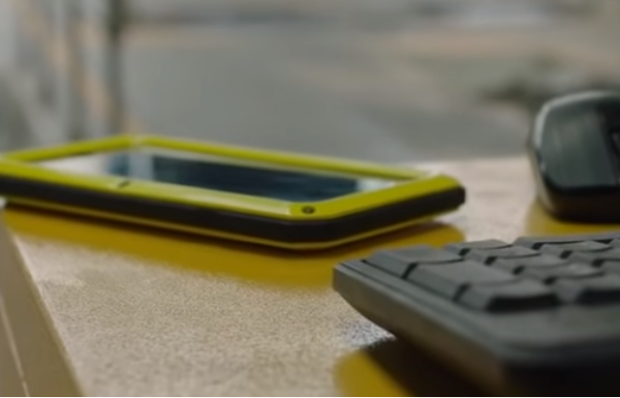
From our perspective, the tests were in the system and on the examiner's tablet and were ready for when the tests were due to start. The results of the test were shared with DVLA and full licences, when the test was successful, were sent quickly.
Of course, not everything ran smoothly, but this is the point of the trial. Running into any issues in a smaller controlled environment allowed them to be fixed and a solution found for next time.
The next major step for the new system is to get the same level of success from a trial, but with less manual input.
Next steps
This trial was a valuable and encouraging first step, but it's important to be clear that DSP is still very much a work in progress and there is more testing and development ahead before it's ready for wider use.
In the short term, we've already made improvements based on what we learned. The next big step is to improve the new system to be able to do more steps on its own such as payments and choosing dates.
We want to be upfront that getting DSP right will take time. This won't happen overnight and we'd rather take the time needed to test thoroughly and build confidence in the system than move faster and risk getting it wrong. Each trial gives us more confidence, and more evidence, to build on before we scale up further.
We'll continue to share updates as DSP development progresses.

14 comments
Comment by Ian hallwood posted on
Be good to know what went wrong and why shared so solutions from all stakeholders may ensure swift results
Comment by Lucy posted on
We had some issues with taking payments and we were grateful for people’s patience with us. This allowed us to identify and resolve the issue.
Comment by Ruth Wallace posted on
Booking and scheduling car tests is different to the requirements for booking/scheduling for Vocational Training Schools (especially those with a Trainer Booking Facility).
PLEASE consult with Large Providers, get feedback and input, before replicating a car test booking System and just 'hoping' that it will do for LGV practical test bookings too!
Comment by Lucy posted on
We will be treating all the services as unique. We are focussing on car at the moment but will be talking to vocational and bike trainers as we move on to those services.
Comment by Mark Chilcott posted on
Brilliant blog, so clear and thorough. I know what goes on with systems like this from my previous employment. Very glad to read about the thorough, careful tests as well as the good progress.
Good luck with the next steps - I look forward to reading more updates as you make further progress
Comment by Ian posted on
Thanks for the update. Lots of 'headlines' but little in the way of detail, or even context. What can we expect from the new system that is different to the old and how will it affect a: learners and b: ADIs?
Comment by Lucy posted on
We are planning to share more details with you about DSP in the coming months, so please look out for these updates.
Comment by Stuart Craigen posted on
Big suggestion is to build into your system a cancellation facility which can work off of test ready people who want to be on a waiting list similar to how the bots work. Remove the need for the bots (which are still somehow working) and pupils won’t need to go down that route. Let everyone be on a DVSA waiting list instead!
Comment by Lucy posted on
We are planning to share more details with you about DSP in the coming months, so please look out for these updates.
Comment by Tim Clayton posted on
This is good to hear. Thank you for a clear progress report and the sensible stepped approach. 🙂
Comment by Stuart Walker posted on
Sounds like you are doing a great job. Will the new system be more user friendly and make available test dates easier to find?
Comment by Lucy posted on
The new system will make the process of booking a practical driving test much more user focused. We are planning to share more details with you about DSP in the coming months, so please look out for these updates.
Comment by Katie Clarke posted on
Booking of practical tests has been unbelievably bad. Pupils are completely fed up with being in a queue of over 20,000 people. The system does not allow you to search your own test area straight away. My pupils are trying to book tests multiple times in the morning afternoon & evening & get on with their normal family, work study life. Tests are coming up nearly 5 months away. This really has become unmanageable as an instructor trying to get your pupils to test, deciding in advance if you think they may be ready in 5 months time. Continually hear of pupils not turning up to tests which is so frustrating when you have pupils desperate for a test or needing a resit asap.
Comment by Lucy posted on
We are planning to share more details with you about DSP in the coming months, so please look out for these updates.